What is Rise to a Desk?
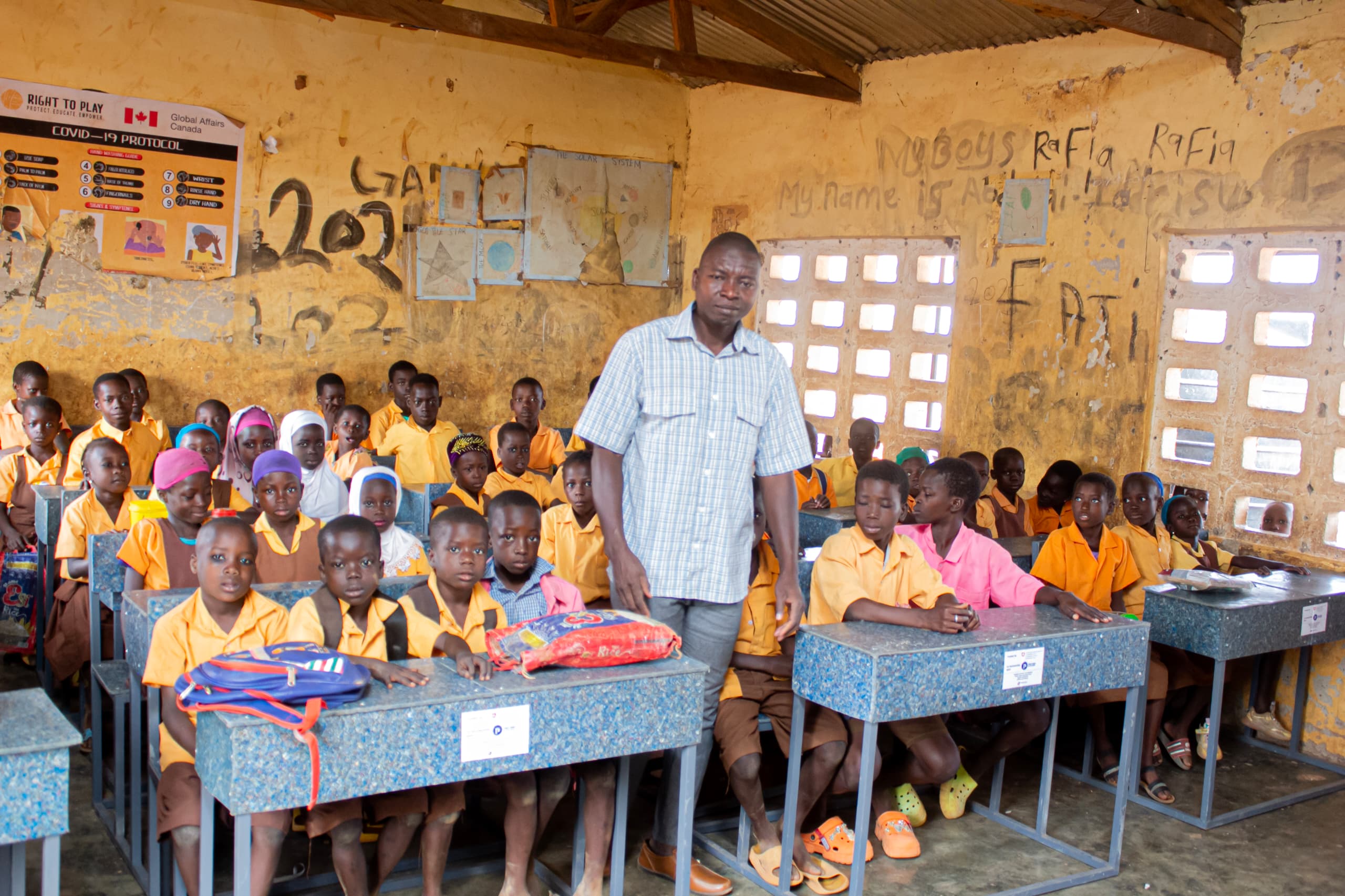
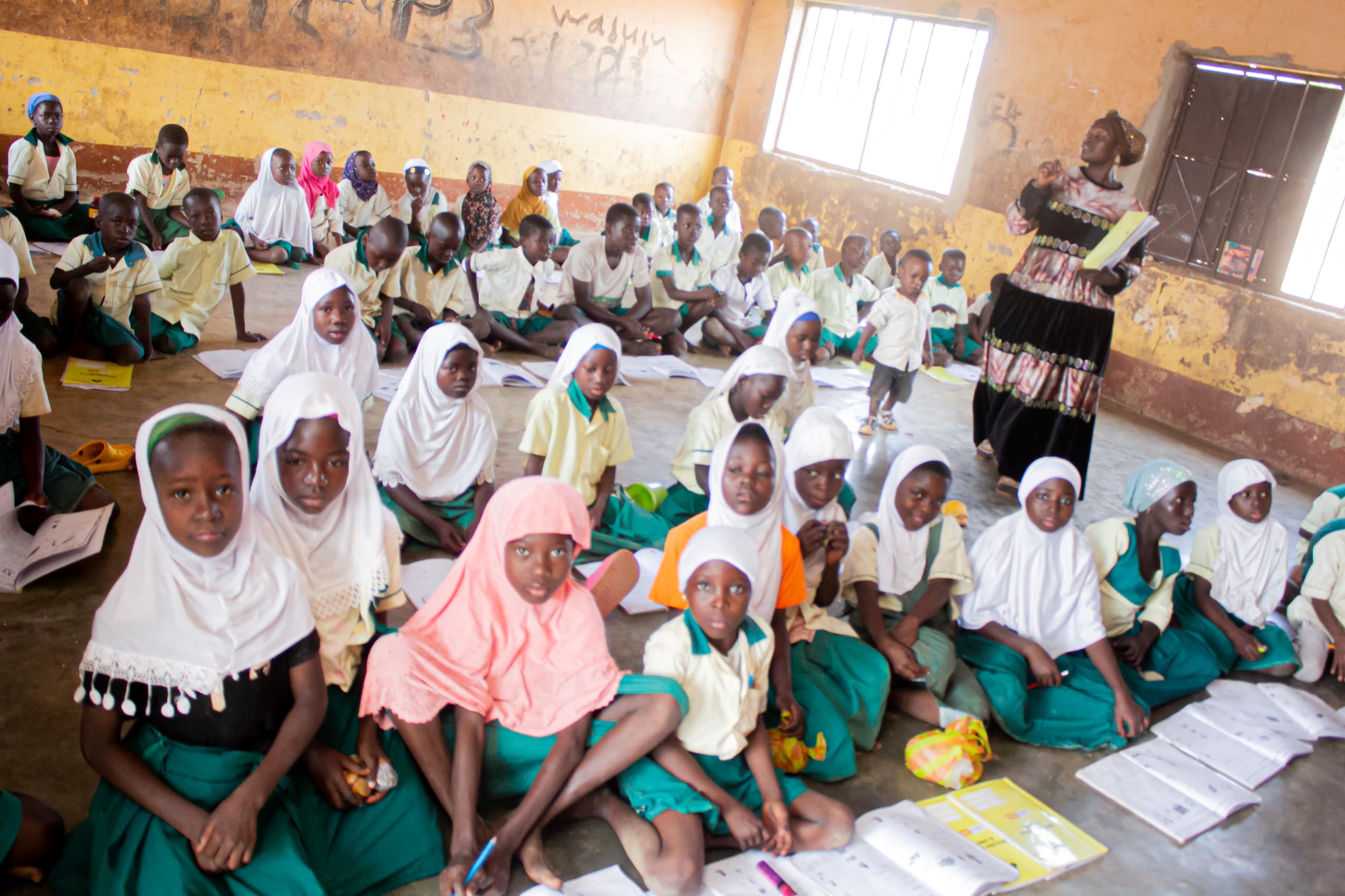
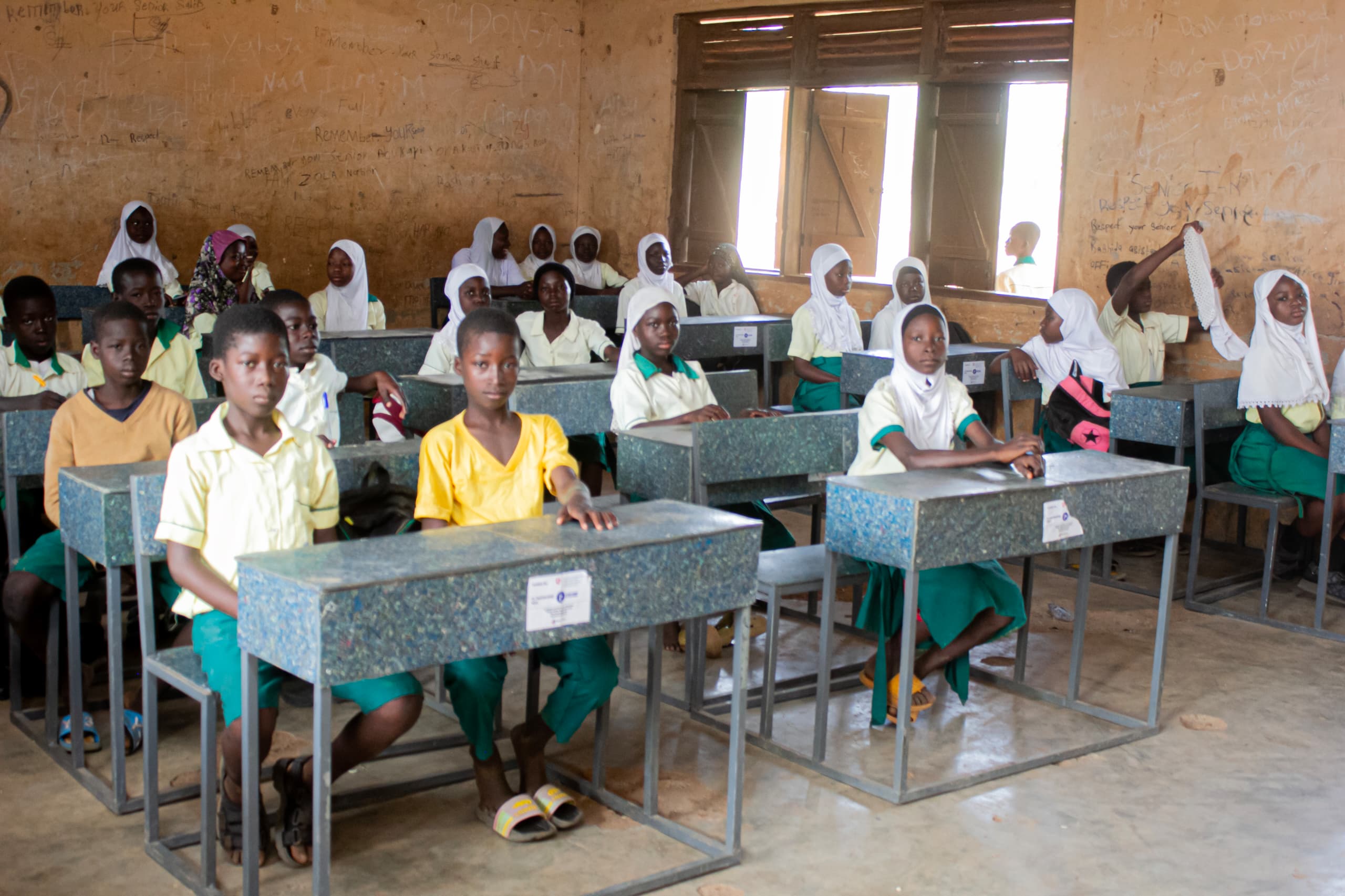
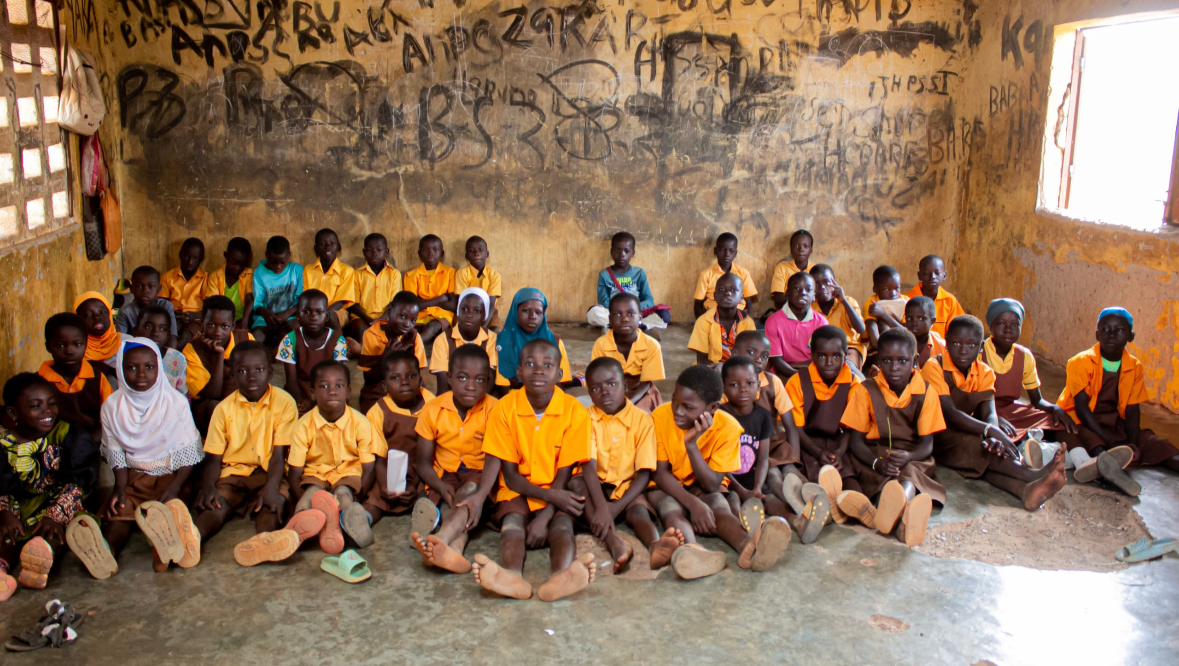
Rise to a Desk is a focused fundraising project providing school desks to children in Northern Ghana who currently learn sitting on the ground. In many classrooms across the region, children sit on bare concrete or dirt floors — hunching over notebooks, straining to write, and enduring physical discomfort that competes with their ability to concentrate.
A desk changes that. It provides a stable writing surface, proper posture, and a signal that education matters.
Proven in 2025
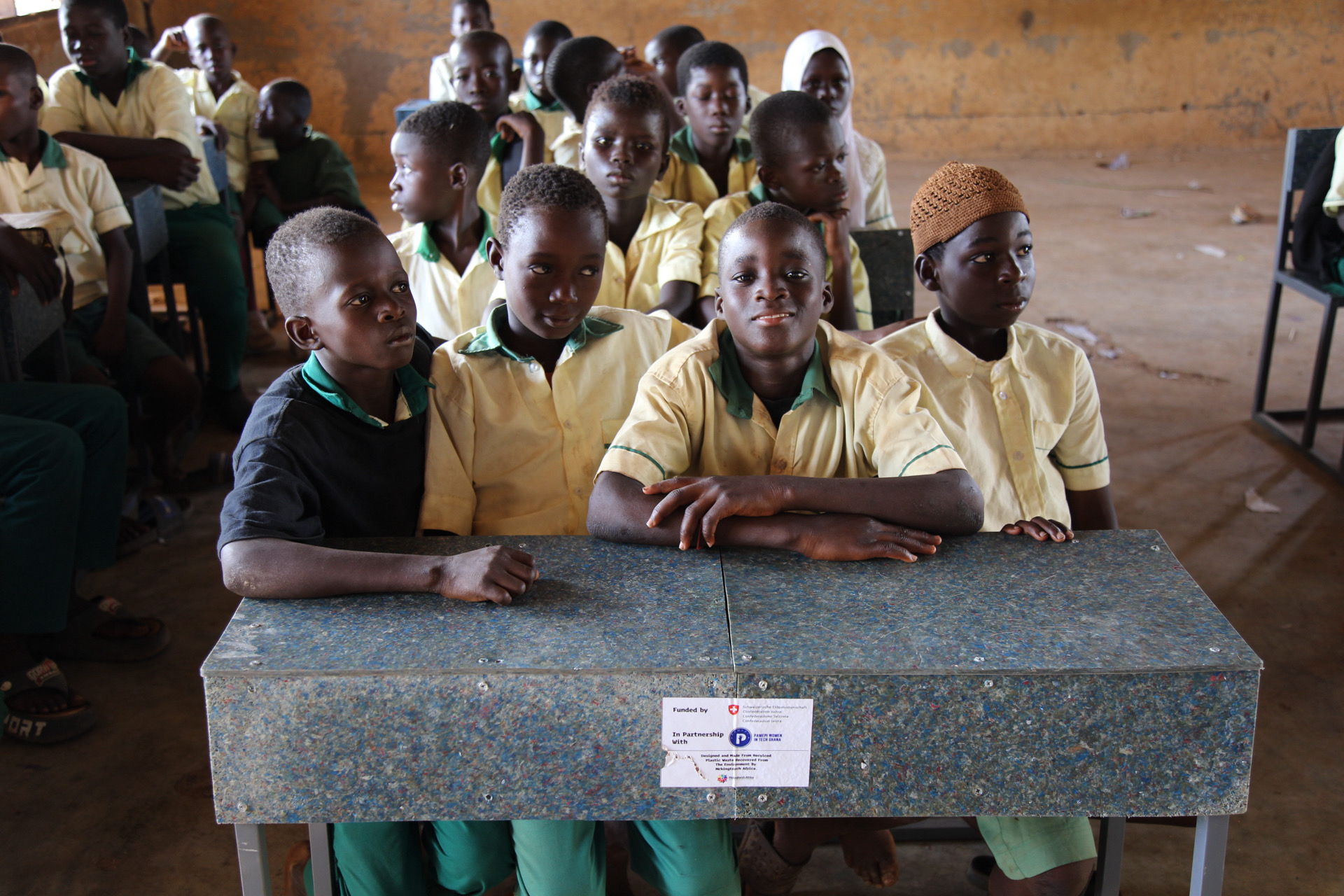
In 2025, a successful pilot — funded by the Swiss Embassy — delivered 64 recycled plastic desks to 2 schools in the Tolon District of Northern Ghana. The impact was immediate: teachers reported improved posture, better discipline, and higher engagement from students.
The Problem
What happens when children learn on the ground
Educational Impact
- Writing on the floor forces hunching, reducing written work quality
- Physical discomfort competes with concentration
- Studies link poor seating to lower academic performance
"A child focused on managing pain is not focused on the lesson."
Physical & Health Impact
- Floor sitting causes back pain in up to 1 in 4 school-age children
- Poor posture restricts breathing, reducing oxygen to the brain
- Can lead to chronic spinal conditions (scoliosis, kyphosis)
- Damp, cold, unsanitary floor conditions increase illness and absences
Mental & Emotional Impact
- Learning on the ground signals education is not valued
- Chronic discomfort elevates cortisol — impairing memory, mood, and motivation
- Uncomfortable children disengage, disrupt, or avoid school entirely
"Dignity matters. A desk signals purpose and belonging."
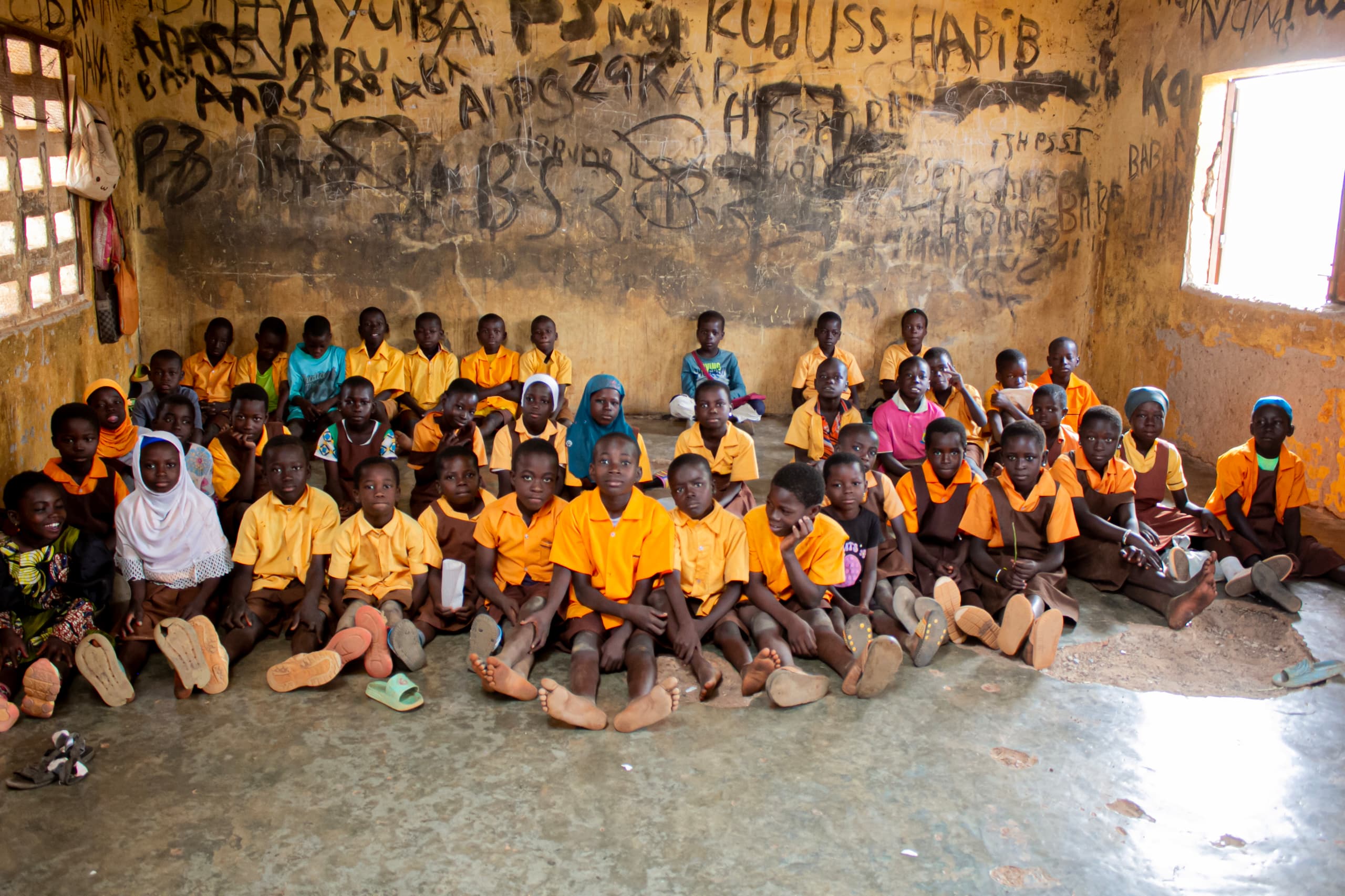
"The absence of a desk is not a minor inconvenience. It is a structural barrier to learning that limits a child's future."
The Solution
What changes with a desk
Immediately
A stable surface, correct posture, and a school that feels like a place of learning.
Within weeks
Teacher reports: improved discipline, higher engagement, kids more settled and focused.
Long term
Protection from physical harm and the basic infrastructure children need to succeed.
"1 donation = 1 child off the ground. The impact is immediate and visible."
Choose a Desk
Three types, one mission. Every desk gets a child off the ground.
Wooden Desk
≈CHF 45
≈600 GHS / ≈$50
Locally sourced. Produced in Northern Ghana. Most affordable option.
Fund This DeskMetal Desk
≈CHF 50
≈700 GHS / ≈$60
Long-lasting, rust-resistant. Produced locally in Northern Ghana.
Fund This DeskRecycled Plastic Desk
≈CHF 60
≈850 GHS / ≈$75
Most durable. Environmentally sustainable. Produced by McIntorch Africa in Southern Ghana.
Due to transport costs from South to North, recycled plastic desks become cost-efficient at 100+ orders. Once we reach that milestone, a full truck ships north.
Why three desk options?
Wooden and metal desks are produced locally in Northern Ghana and can be delivered immediately. Recycled plastic desks — our most sustainable option — are produced by our partner McIntorch Africa in Southern Ghana. Due to transport costs from south to north, plastic desks only become cost-efficient when ordered in batches of 100 or more. Once we reach that milestone, we will ship a full load north. Every desk type gets a child off the ground. The plastic option simply requires us to hit a minimum together.
All prices shown in CHF (Swiss Francs). GHS and USD amounts are approximate (≈). Exchange rate at time of writing: 1 CHF ≈ 14.155 GHS.
The Team

Fallou
Co-founder — Fundraising & Communications

Fuseini Yakubu
Co-founder & Ground Partner. Traditional chief, Northern Region. Leads PAMEPI (Paabinaa Meriga Peace Initiative). Oversees local needs assessment, school coordination, and delivery.

Calvin
Co-founder — Strategy & Partnerships
PAMEPI
Implementing NGO partner on the ground in Northern Ghana
Donate
Every desk changes a child's school day. Choose how you'd like to give.
Swiss Bank Transfer
- IBAN
- CH49 0900 0000 1681 3906 4
- Recipient
- Fallou Galass Bakhoum
- Address
- Funkenstrasse 10, 4800 Zofingen
- Reference
- Rise to a Desk
Questions? Reach us at risetoadesk@gmail.com or via Instagram @risetoadesk